Ambivalent Imitation (AI)
Last week, our good friends’ dangerously cute 2-year-old daughter saw me preparing lunch and cheerfully chirped, “I want a burger!” How could I resist? The only problem…I was making butter-and-jelly sandwiches.
In this little cherub’s food taxonomy, the genus of “things eaten between slices of bread” contains only one species: hamburgers. And why shouldn’t it? But alas, the world is not so good as that. Surprisingly, she didn’t care that this sandwich wasn’t really a hamburger and devoured it with all the gusto as if it had come hot off the grill with melted cheese. What she called this food, its category in her mind, made all the difference for her expectations about, experience of, and satisfaction with eating the meal. If I could convince myself that all sandwiches were burgers, perhaps the world would be a better place…or would it?
On the less innocent side, have you ever noticed that some tiny humans will eat only one kind of meat, whether it’s chicken, ham, etc.? A slightly clever parent, I immediately see in this preference an opportunity to maximize tiny human participation in any number of meals. With pangs of conscience, however, I find myself asking this question:
Would it be wrong (asking for a friend, not from personal experience, of course) to call all meat by this particular name (say, chicken), for the purpose of increasing dinner-time efficiency?
If everything is chicken, then one parent can easily accomplish what would take two cajoling or threatening parents heroic and long-suffering effort to achieve.
By now, you can probably see where I’m going with this—AI.
Whether “Grok,” “Chat GPT,” “Gemini,” “Claude,” or any other system, what we call these things matters. I, for one, prefer not to think of a butter-and-jelly as if it were a quarter-pounder with cheese and onions. Whatever these AI systems do, it is not what humans do when they know something; whatever these AI systems are, it is not the human’s rational power of intelligence. We must be willing to die on that hill. If we cede that ground we end up affirming the materialist falsehood that the rational soul and the mind are simply “brain-states,” series of electro-chemical nerve firings that will eventually be reproduced artificially by an advanced electronic network.
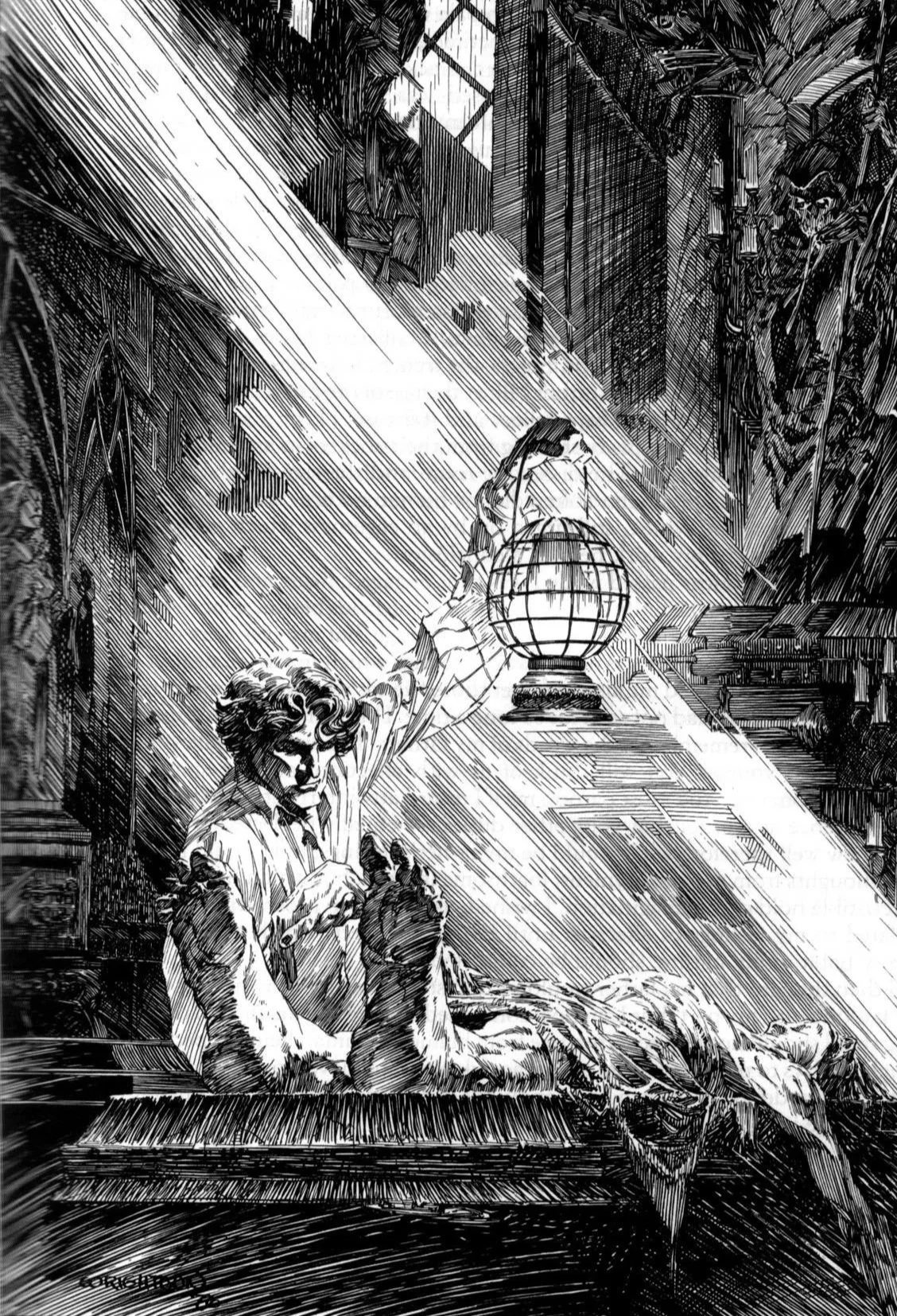
Here’s another story for you. Yesterday, in the course of an admissions interview, I asked a potential student to tell me some insight he recalled from Frankenstein, which he had read 15 months ago. His response was basically this:
I was amazed because Victor tried to re-create man but instead created a monster, and as you read on you see that Victor’s sanity seems to decrease as the monster’s self-awareness and agency seem to increase. By the end of the book the monster seems more sane than Victor. It just strikes me as exactly what we’re doing with AI right now and what our experience of AI is like.
First, I thought, let’s admit this guy immediately. When can you start? Recovering my composure, I thought with joy that the young men we are forming are already asking critical questions and seeking to live authentic lives with depth of soul!
So, for now, inspired by that potential (and I hope soon-to-be actual student), whenever I see the acronym AI, I will think to myself, “Ambivalent Imitation.”
Of course my acronym begs the question, what is being imitated?
Every technology is a tool that extends human powers. For example, if skin protects the person’s interior from some external harms, then a shoe extends that protective power. Writing does something similar for human speech. Writing extends through time and space the fleeting and short-distance power of human verbal communication. Writing also turns a mental artifact (a memory) into a physical artifact (words on a page).
At the same time, however, both of these technologies can erode the very power they extend. A man who wears shoes all day may never develop the callouses the foot would otherwise naturally develops for, say, walking over gravel. Further, a person who buys a book of poems or short stories may find less reason to listen to others recite or tell them, and almost no reason to commit them to memory. This is, interestingly, Socrates’ critique of writing in the Phaedrus.
If technology, by imitation, both extends and erodes natural human powers, what human powers does AI ambivalently imitate? For today, here’s a stab at just one—memory. When I ask AI what Thomas Aquinas said about the virtue of charity, and I get a neatly packaged summary showing me all kinds of things I once read but have since forgotten, things someone somewhere either did remember or still remembers today.
Memory, however, is a unique act of each knowing person. To remember something about Aquinas’ Summa, I may have to think about where I was when I read it, who I was reading it with, or how reading it made me feel. I may need to begin from some principle I’m sure he said and reason my way to what he must have said. The act of Kent remembering something is idiosyncratic, that is, it’s unique to me. It is subjective, that is, the act of me as a free rational subject. My mind re-integrates the present with my past and calls forth a truth known. For example, there’s a particular smell of oak that brings to mind a flood of childhood memories because that was the smell of my parents’ armoire in my childhood home. When I use AI to “remember” something, the system presents it to me in association with other things I have shown a history of having asked about. The system presents the information to me as if it were contextualized within my scope of interest and knowledge even if it is completely new to me. It’s giving me a simulacrum of memory where no real memory exists.
AI seems to extends memory because it gives me the sense (rightly or wrongly) that I can “remember” anything that humans have ever known, as if I had known it myself. It’s as if the AI is a common bank from which any user can draw memories. When I ask Copilot to tell me how to change an ignition coil, its as if I’m remembering something someone else knows. Thus, my own memory is extended through a link to a kind of corporate human pool of knowledge, always presented to me within the context of previous searches and interests.
At the same time, however, AI erodes my memory for at least two reasons. First, I am less motivated to commit something to memory precisely because it is always available on AI. I am simply less likely to perform my own human act of remembering. Second, using AI to learn something thins out the layers of association that build up a strong memory to begin with. If you learn something on AI, you don’t remember what it smelled like, where you were, who you were with, or the way your pencil snapped as you were writing it down. All you have is a finger swipe and eye movements. The associations that build up the richness of my unique human memory are thinned out, leaving only the visual. Learning something on AI is typically absent of olfactory, geographic, social, tactile, kinetic, or even emotional cues that reinforce memory. It’s just like the shoes and the callouses.
Just one of the ten-million dollar questions, of course, is this: does the extraordinary power of extending human memory power outweigh the evil of eroding of our own human act of remembering?
The answer, unfortunately, may be one we discover only after the cat is out of the bag.
Thankfully, Pope Leo XIV, in his wisdom, has recently reflected on AI and its relation Catholic social teaching in his first encyclical Magnifica Humanitas. Over the coming months we will unpack various ideas from the encyclical, especially as they relate to San Damiano’s mission to rebuild the Church and recover the dignity of work, in our new video and writing publication, Build What Lasts.
Stay tuned for more! In the meantime, Fr. Ambrose Criste and I had a conversation last month on AI you can check out here.
State Approval
On the feast of St. Joseph the Worker, the State of Illinois Board of Higher Education approved San Damiano College for the Trades Catholic Craftsman program!
22-Mile Pilgrimage walk to Our Lady of Champion!
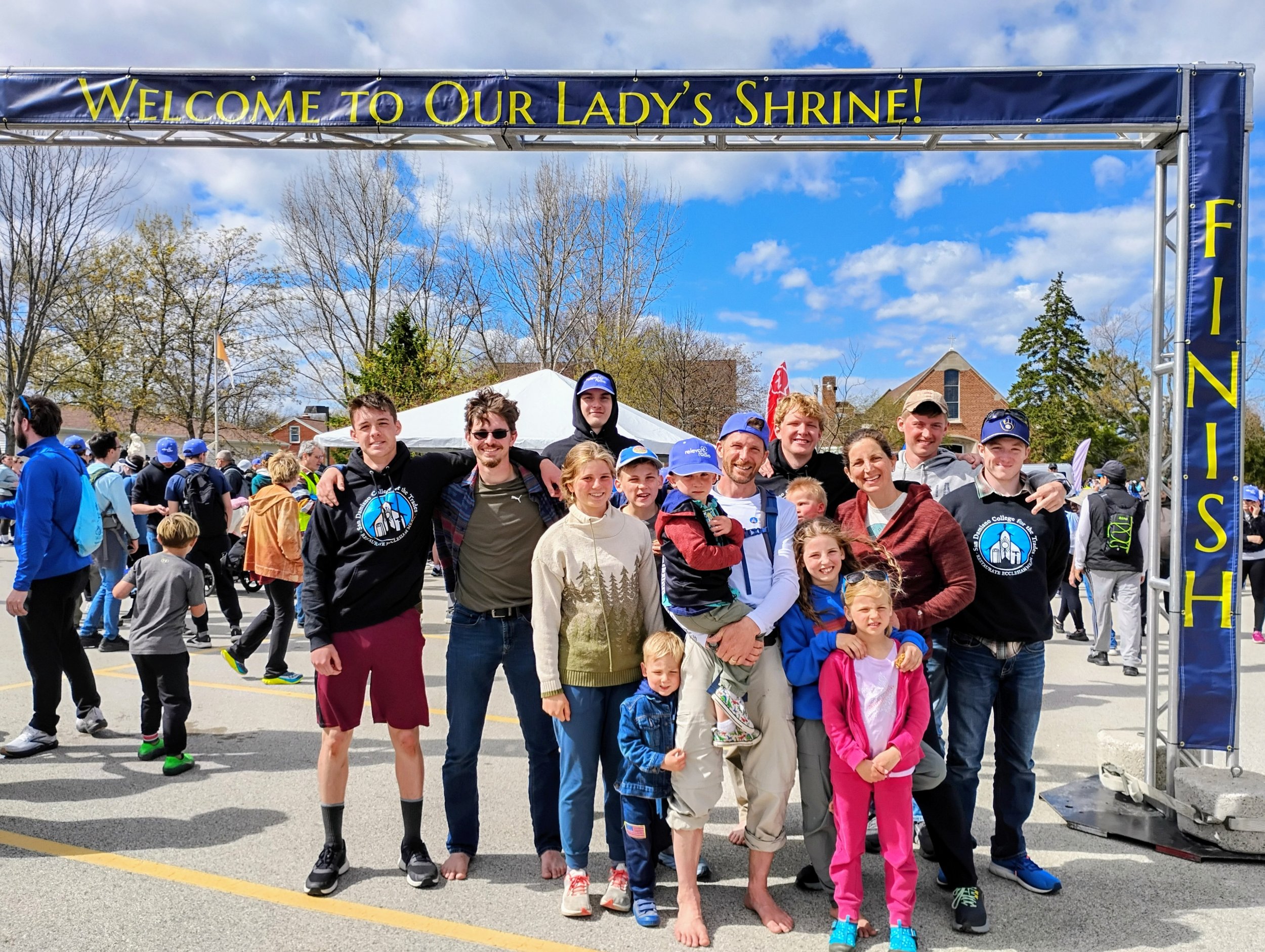
15 students plus faculty and staff made this one-day pilgrimage from Green Bay to the only approved Marian apparition in the USA. Some students went barefoot! God sends his graces. Big thanks to the Derocher family for hosting us all!
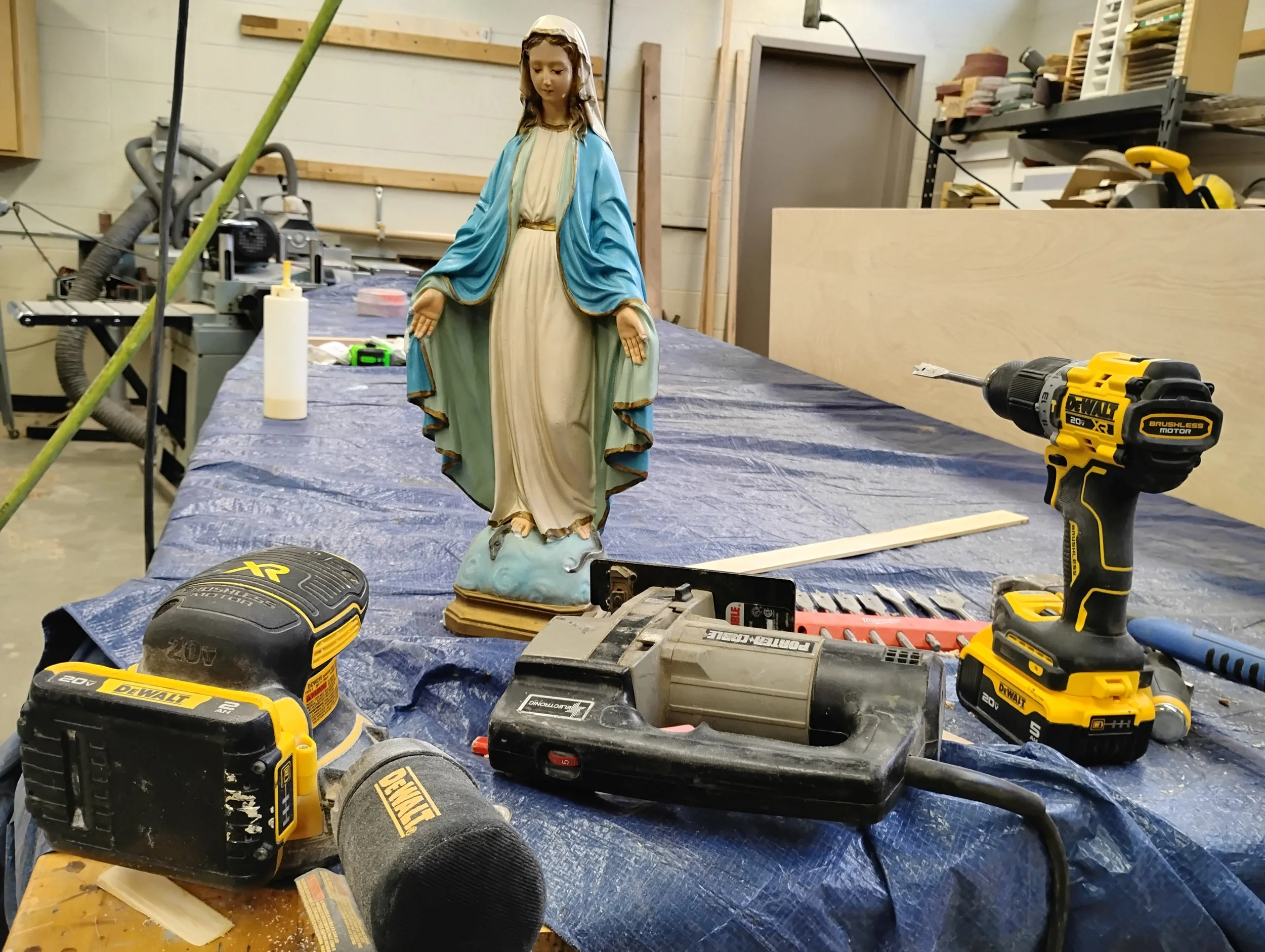
Working full time! With the first academic year finished, students transitioned to fulltime work schedules. Summer classes begin on June 1 in the evenings.
Whatever it is, the way you tell your story online can make all the difference.
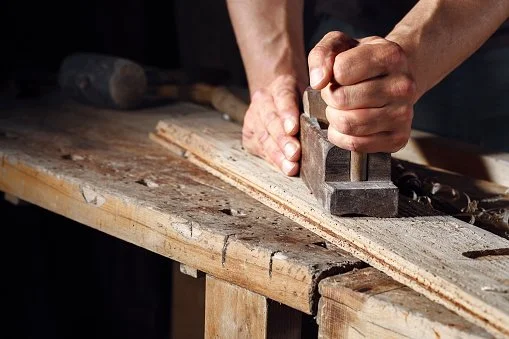
Old-World Trades for High Schoolers
In June, San Damiano hosts its first week-long summer program (Opus Manus) on blacksmithing and hand tools. The program filled up in about a week after applications opened!

Project Re-Build
San Damiano is in the market for at least one home to remodel and sell, hopefully to a first-time homebuyer. Any interested sellers or donors, please get in touch! We need your help.

Summer Seminars on Knights of Columbus Video Series with Incoming Freshmen
Faculty will host online conversations with incoming freshmen to reflect on the dignity of work video series recently produced by the Knights of Columbus.